
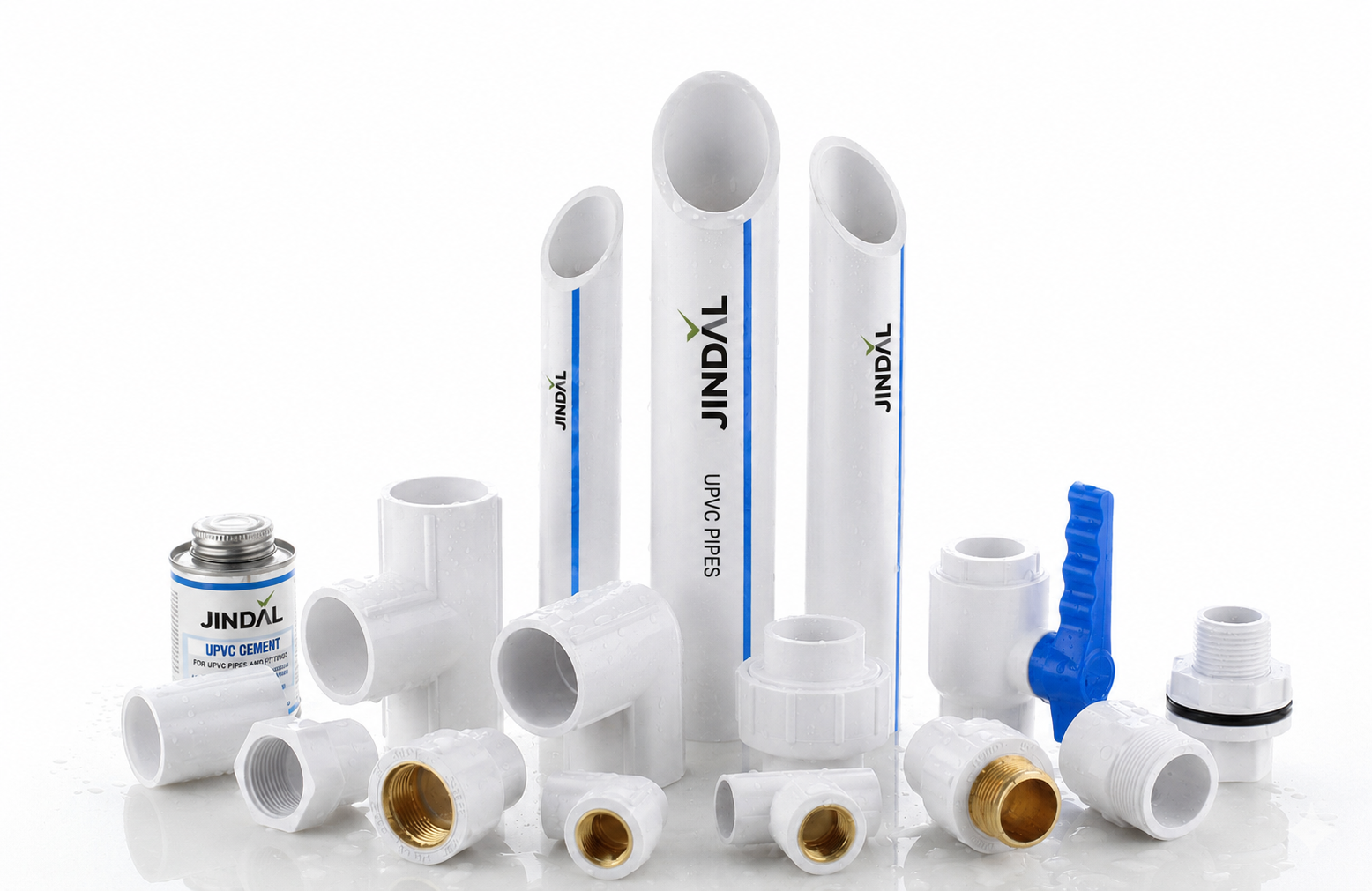
UPVC is PVC without plasticisers — making it rigid, lead-free and the safest choice for drinking water supply lines.
UPVC stands for Unplasticised Polyvinyl Chloride. The absence of plasticisers and lead-based stabilisers makes UPVC the safest plastic pipe for drinking water — and the reason it has replaced GI for cold-water supply across modern Indian homes.
Where to Use UPVC
Cold-water plumbing inside the home.
Borewell to overhead tank rising mains.
Apartment risers and down-takes.
Commercial and institutional cold-water distribution.
Why UPVC Over GI
No rust, no metallic taste in water.
10× lighter — faster installation, lower civil load.
Smooth bore — better flow, lower pumping cost.
Service life of 50+ years.
Standards & Sizes
UPVC pressure pipes follow IS 4985 in Class 1 to Class 5 pressure ratings, in nominal sizes from 20 mm to 315 mm. For typical home supply, 25–40 mm in Class 3 is the default.
Frequently Asked Questions
Is UPVC safe for drinking water?
Yes. UPVC pipes manufactured to IS 4985 are lead-free, food-grade and approved for potable water supply.
What is the difference between PVC and UPVC?
Standard PVC contains plasticisers for flexibility; UPVC has none, making it rigid, stronger and safer for drinking water.
Which IS standard covers UPVC pipes?
IS 4985 covers UPVC pressure pipes for water supply in India.
Reviewed by
Sahil Jindal
Managing Director, Jindal Composite Tubes Pvt Ltd
3rd-generation pipe manufacturer with 25+ years of hands-on experience in PVC, CPVC and UPVC pipe engineering, ISI/BIS compliance and India-wide plumbing distribution.