Safe wiring. Fire-retardant. Built to IS 9537 Part 3.
Flame-retardant electrical conduits for safe concealed wiring in any building.
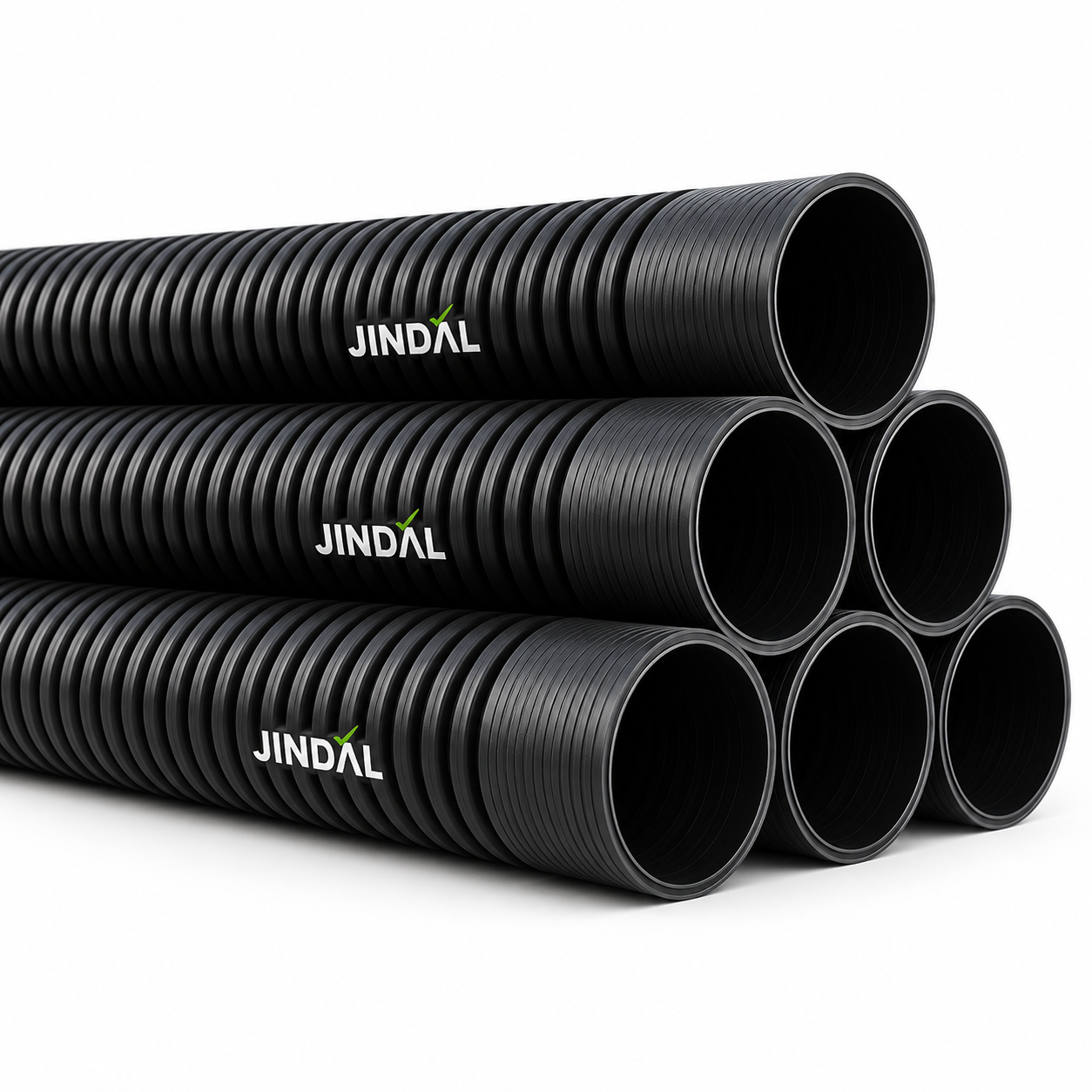
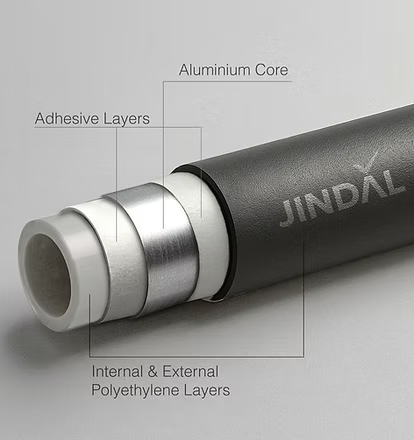
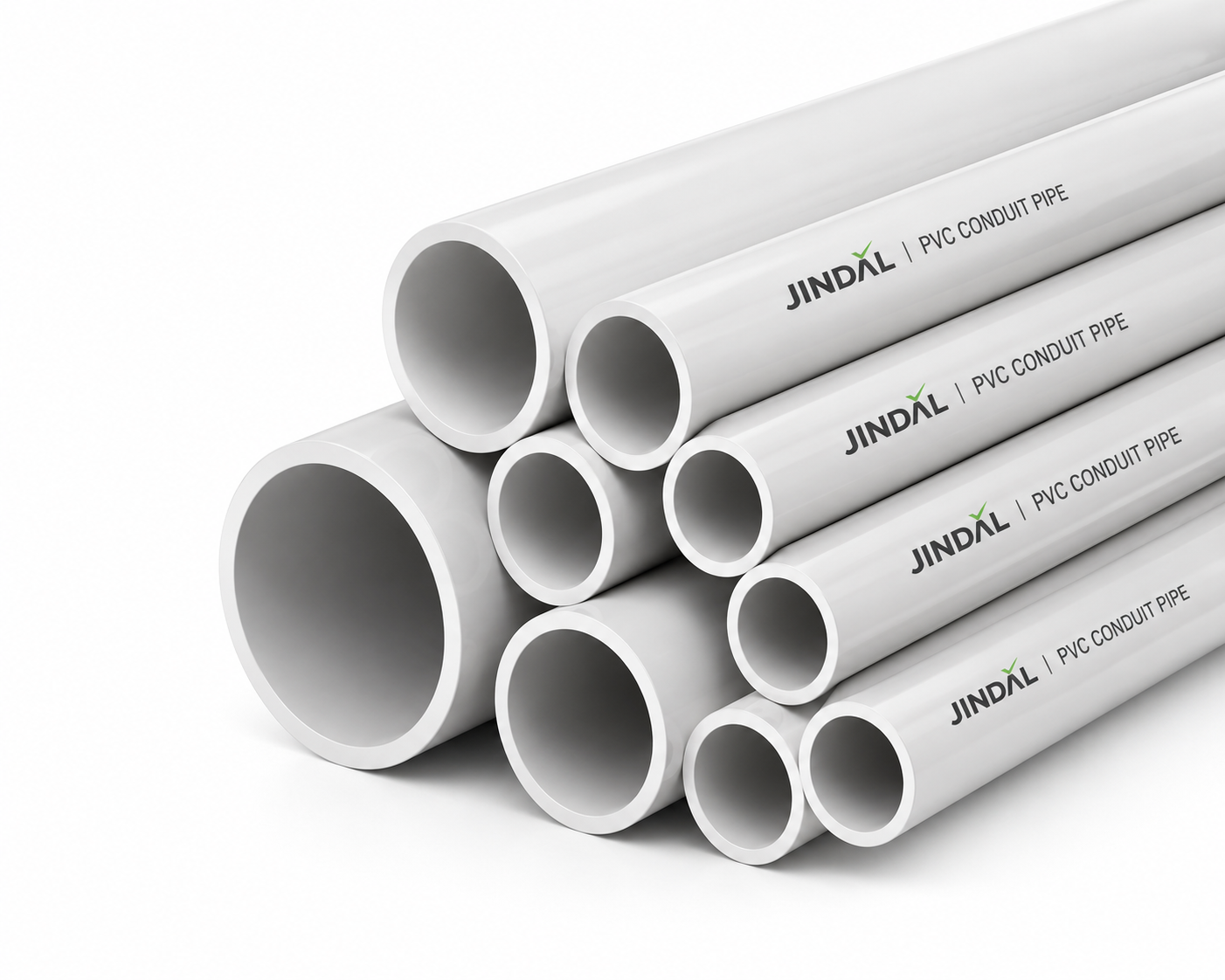
Jindal PVC Electric Conduit Pipes are rigid, non-metallic conduits engineered to route and protect electrical cables in concealed and surface wiring across homes, offices, factories and infrastructure projects. Manufactured from specially formulated unplasticised PVC (uPVC) with high-impact modifiers and fire-retardant additives, they shield wiring from mechanical damage, moisture, rodents and chemical attack for long, trouble-free service.
Produced on twin-screw extruders, every length is calibrated for true bore, uniform wall thickness and a smooth interior finish so cables draw through easily without snagging or insulation damage. The conduit is non-conductive, corrosion-proof and fully insulated, eliminating the earthing and rusting issues common with steel conduit.
Available in Light, Medium and Heavy Mechanical grades to match the load class of the installation — and supported by a complete fittings range so the wiring system is delivered as a single, leak-tight, fire-safe solution.
Manufactured to IS 9537 (Part 3) for rigid uPVC conduits and IS 3419 for matching uPVC fittings. Conduits are available in 20, 25, 32, 40 and 50 mm nominal sizes in three mechanical grades : Light (LMS), Medium (MMS) and Heavy (HMS) : supplied in standard 3 metre lengths.
ISI marked to IS 9537 (Part 3) and produced under ISO 9001 quality management. Every batch is checked for outer diameter, wall thickness, compression strength, impact resistance and flame-retardant performance before dispatch.
Long service life in concealed installations — does not rust, rot or corrode.
Faster installation than metal conduit — no threading, no painting, no earthing.
Lower lifecycle cost — no rusting, no replacement, no maintenance.
Measure and cut the conduit square to length using a fine-tooth hacksaw.
Deburr and lightly chamfer the cut edges so the cable insulation is not scored during pulling.
Clean and dry both the conduit end and the fitting socket — they must be free of dust, moisture and grease.
Apply an even coat of PVC solvent cement to the outside of the conduit and the inside of the fitting socket.
Push the conduit fully into the fitting with a slight twist and hold for about 30 seconds so the solvent-weld joint sets.
Allow the joint to cure fully before drawing cables or pouring concrete over the run.
All dimensions in mm. LMS = Light, MMS = Medium, HMS = Heavy Mechanical Strength.
| Nominal Size | Max O.D. | Min O.D. | Min I.D. (LMS) | Min I.D. (MMS) | Min I.D. (HMS) |
|---|---|---|---|---|---|
| 20 | 20.0 | 19.70 | 17.40 | 16.90 | 15.80 |
| 25 | 25.0 | 24.60 | 22.10 | 21.40 | 20.60 |
| 32 | 32.0 | 31.60 | 28.60 | 27.80 | 26.60 |
| 40 | 40.0 | 39.60 | 35.80 | 35.40 | 34.40 |
| 50 | 50.0 | 49.50 | 45.10 | 44.30 | 43.20 |
A PVC electric conduit is a rigid tube that houses and protects electrical cables in concealed and surface wiring. It shields the wiring from mechanical impact, moisture, rodents and chemicals, keeps the installation neat and organised, and makes future re-wiring or upgrades easy because cables can be drawn out and replaced through the same conduit.
Jindal PVC Electric Conduit Pipes conform to IS 9537 (Part 3) for rigid uPVC conduits, and the matching fittings are manufactured to IS 3419. They are ISI marked and tested for outer diameter, wall thickness, compression strength, impact resistance and flame-retardant performance.
The grade indicates the conduit's compression and impact strength. Light (LMS) suits domestic concealed wiring with light mechanical load, Medium (MMS) is the most common choice for residential and commercial concealed wiring, and Heavy (HMS) is used where conduits face higher mechanical stress — industrial floors, surface runs and locations with risk of impact during use.
Standard nominal sizes are 20, 25, 32, 40 and 50 mm, supplied in 3 metre lengths. The 20 mm and 25 mm sizes are the most widely used in residential wiring; larger diameters are chosen when more cables run together or when future spare capacity is required.
Yes. Jindal PVC conduits are manufactured with fire-retardant additives and are self-extinguishing — they do not sustain a flame when the ignition source is removed. This limits the spread of fire along the wiring loom and improves overall building safety.
No. PVC is a non-conductor, so the conduit itself does not need to be earthed. Earthing is provided through the dedicated earth conductor inside the conduit, as per standard electrical practice. This is one of the key advantages over metal conduit, which must be bonded and earthed throughout.
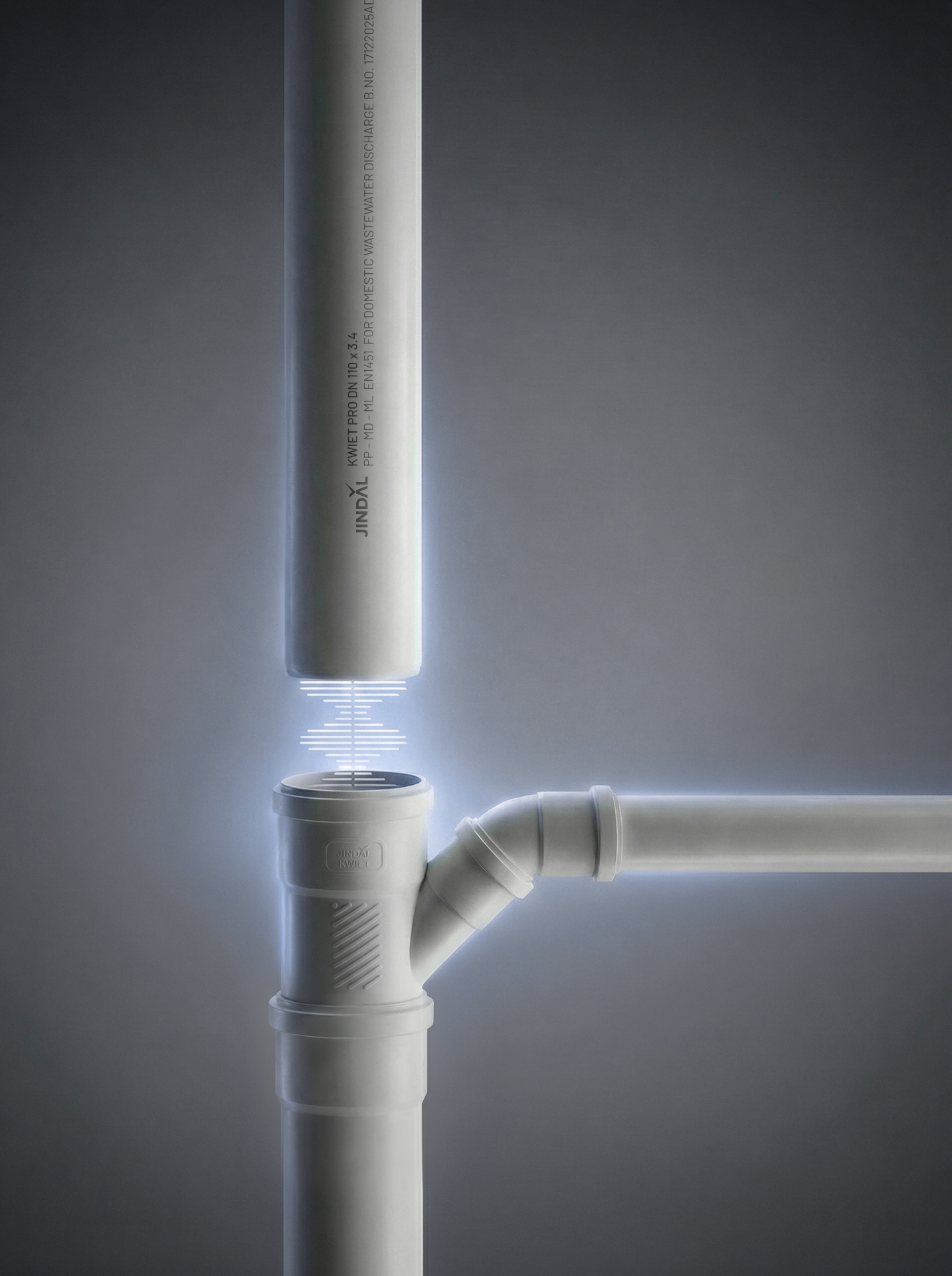
Jindal PVC conduits use a solvent-weld jointing system. Cut the pipe square, deburr the edge, clean both surfaces, apply PVC solvent cement evenly to the pipe end and the fitting socket, and push together with a slight twist. The solvent fuses the two surfaces into a single, leak-tight joint that sets in about 30 seconds and is ready for cable pulling once fully cured.
Yes. PVC conduits are widely used for fully concealed wiring inside RCC slabs, brick walls and plastered surfaces. Anchor the run with clips or tying wire before the pour, use proper bends at direction changes, and the conduit will remain safe and accessible for cable pulling for the life of the building.
PVC conduits are designed for long service life in concealed and surface installations. They do not rust, corrode or rot, and are unaffected by moisture, plaster chemicals and common household substances — which is why they have largely replaced steel conduit for concealed wiring in modern construction.
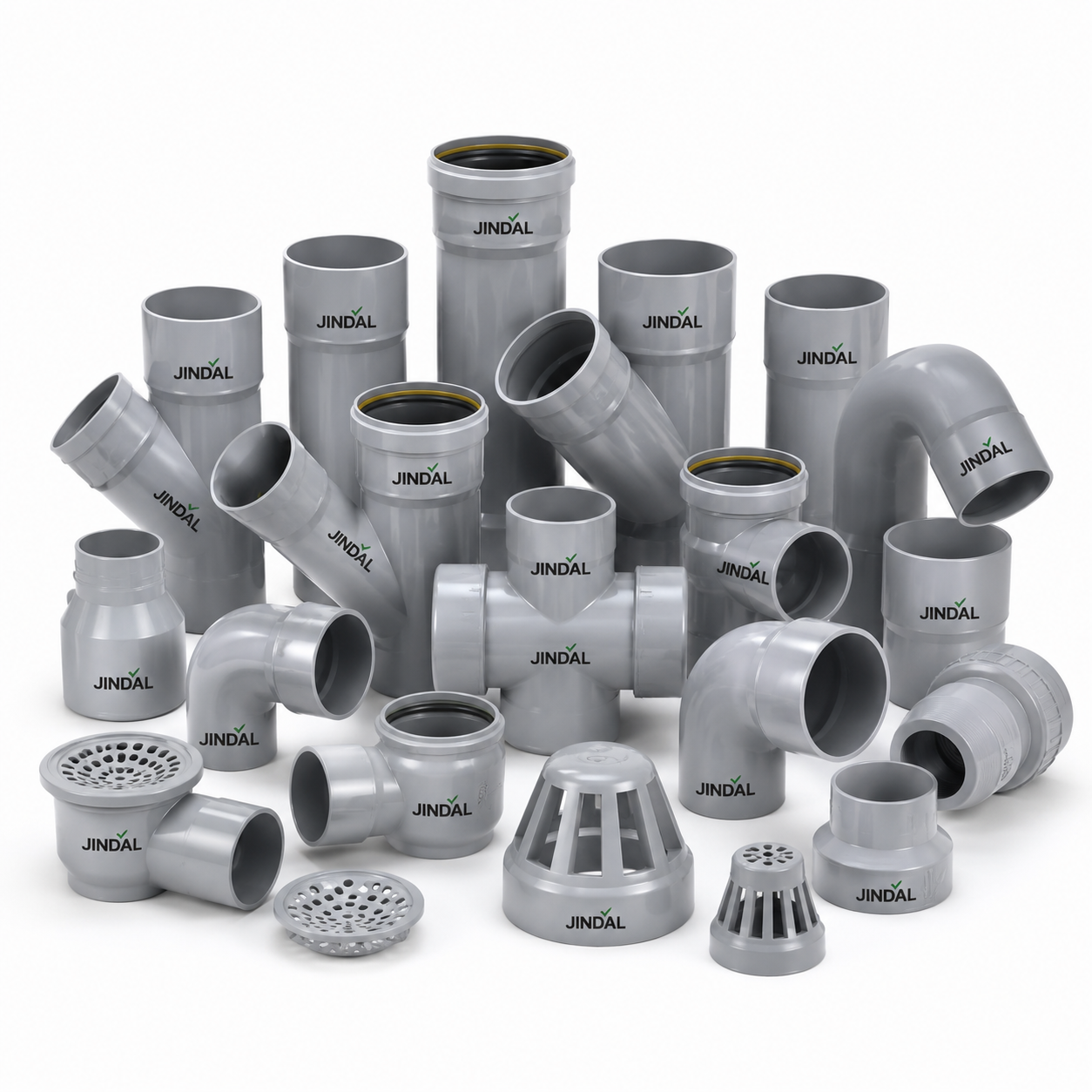
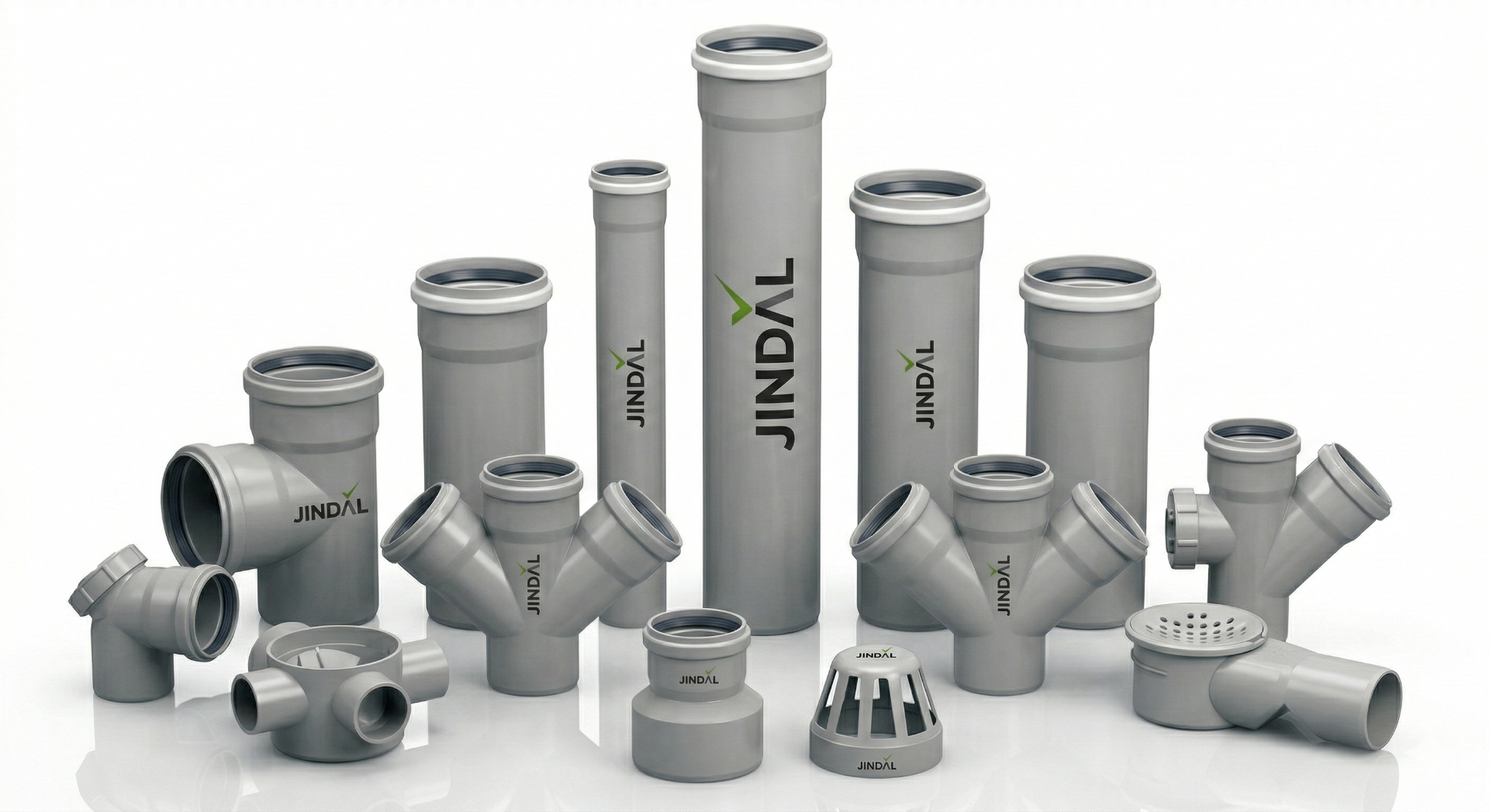
A complete range of IS 3419 fittings is available — couplers, normal and inspection bends, junction boxes (2/3/4 way), deep junction boxes, terminal boxes, saddles, reducers and end caps — all designed to deliver a continuous, secure and serviceable wiring system when combined with Jindal conduits.
Next Step
Talk to our team about sizing, pricing and project quantities — or grab the catalog and price list.