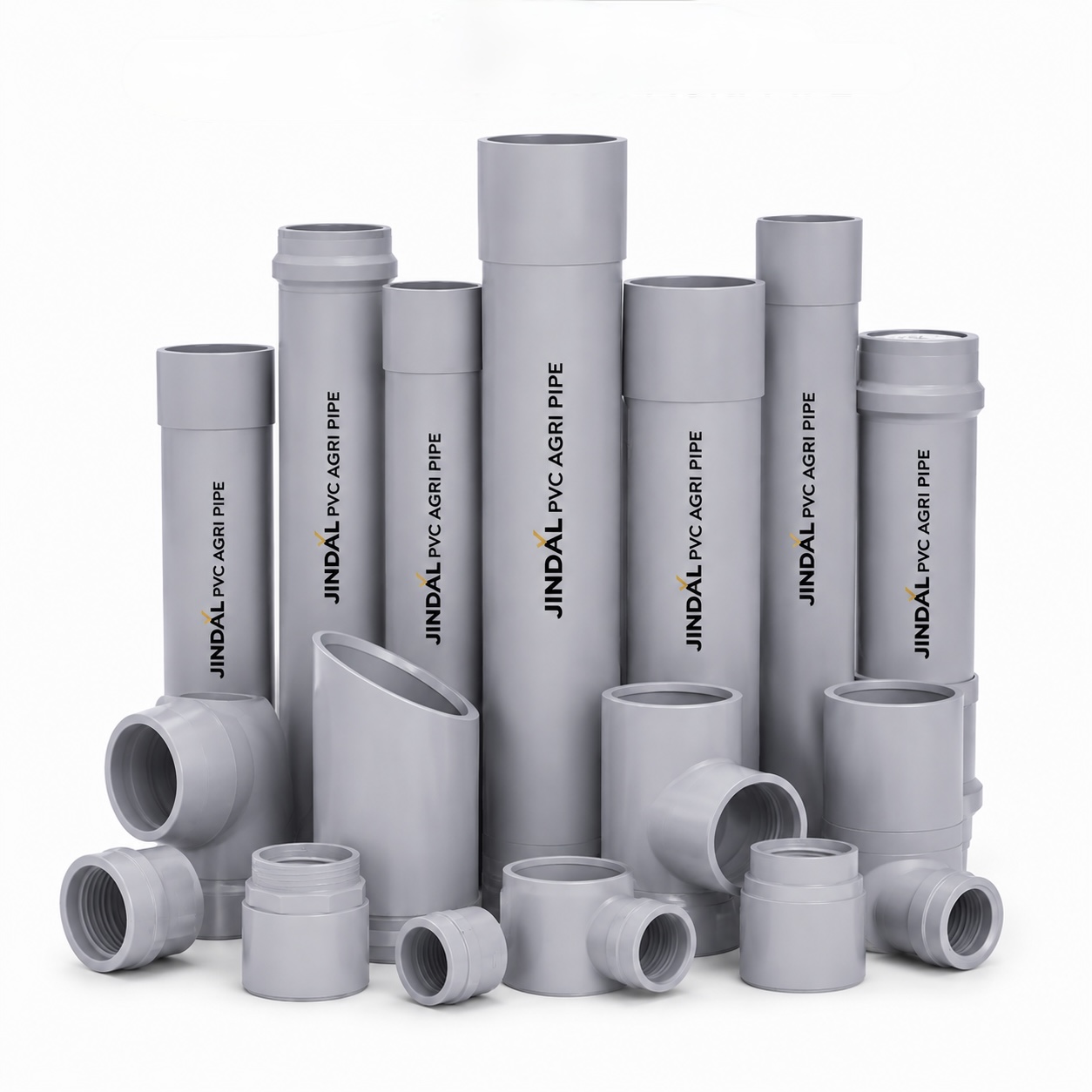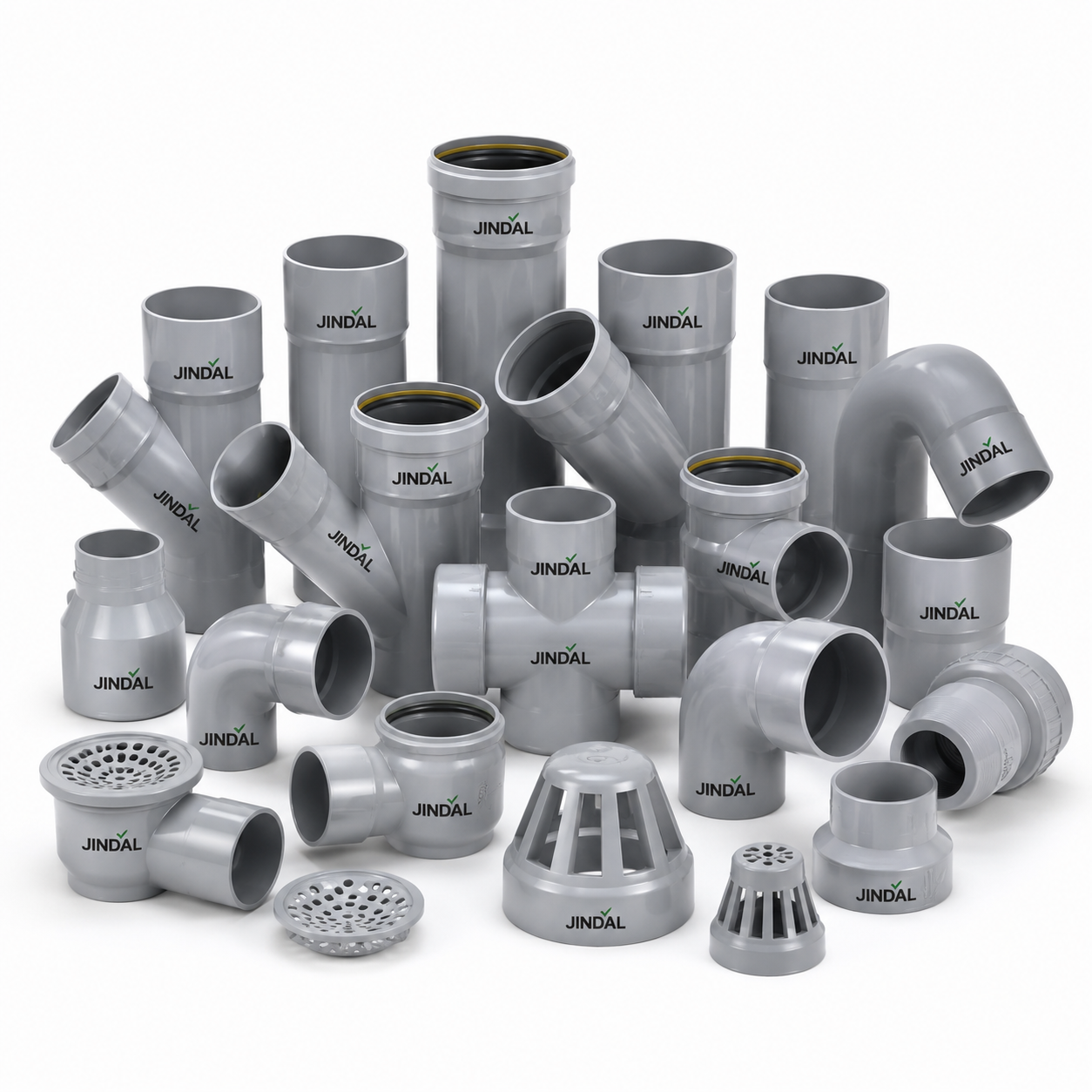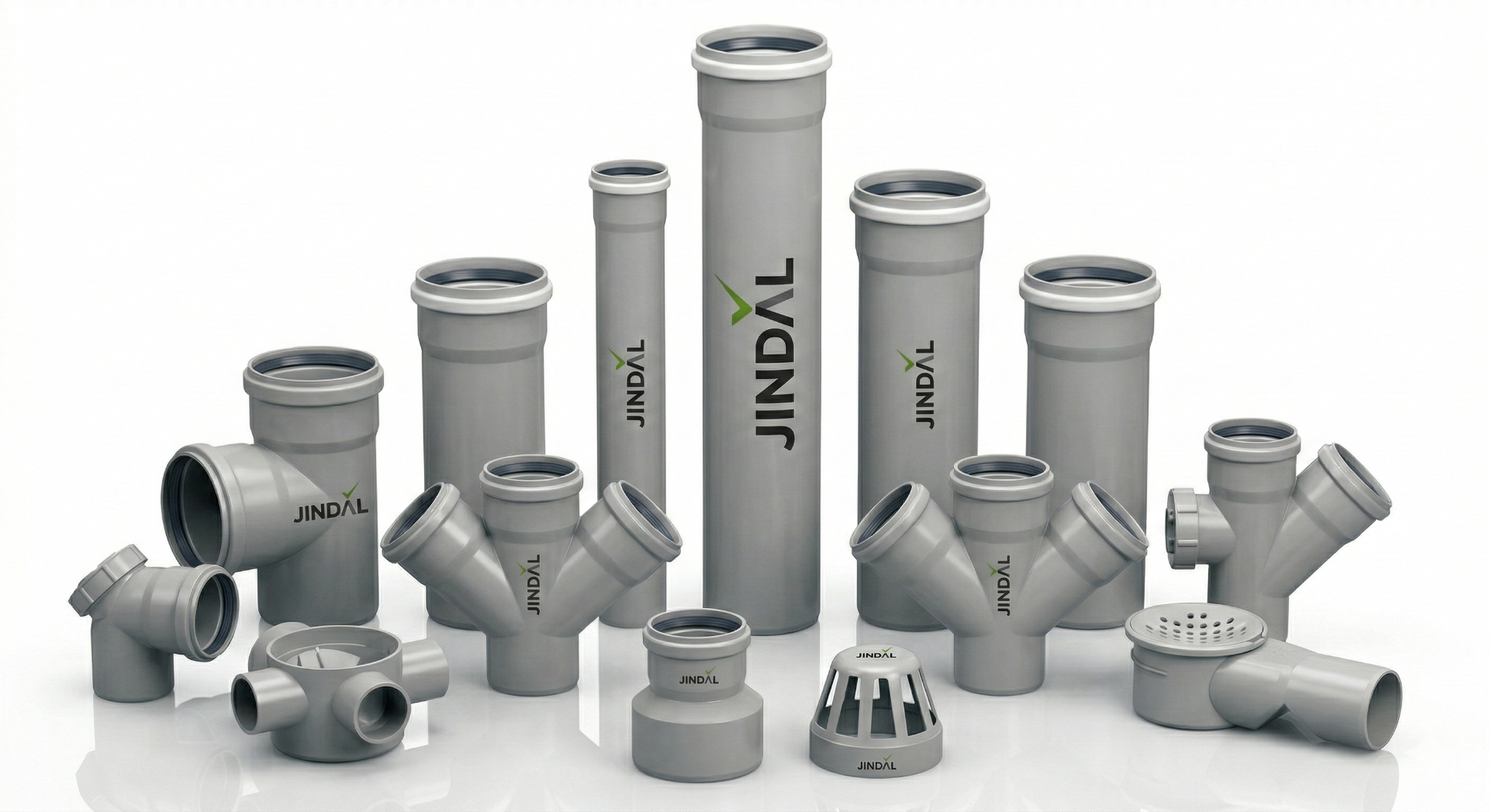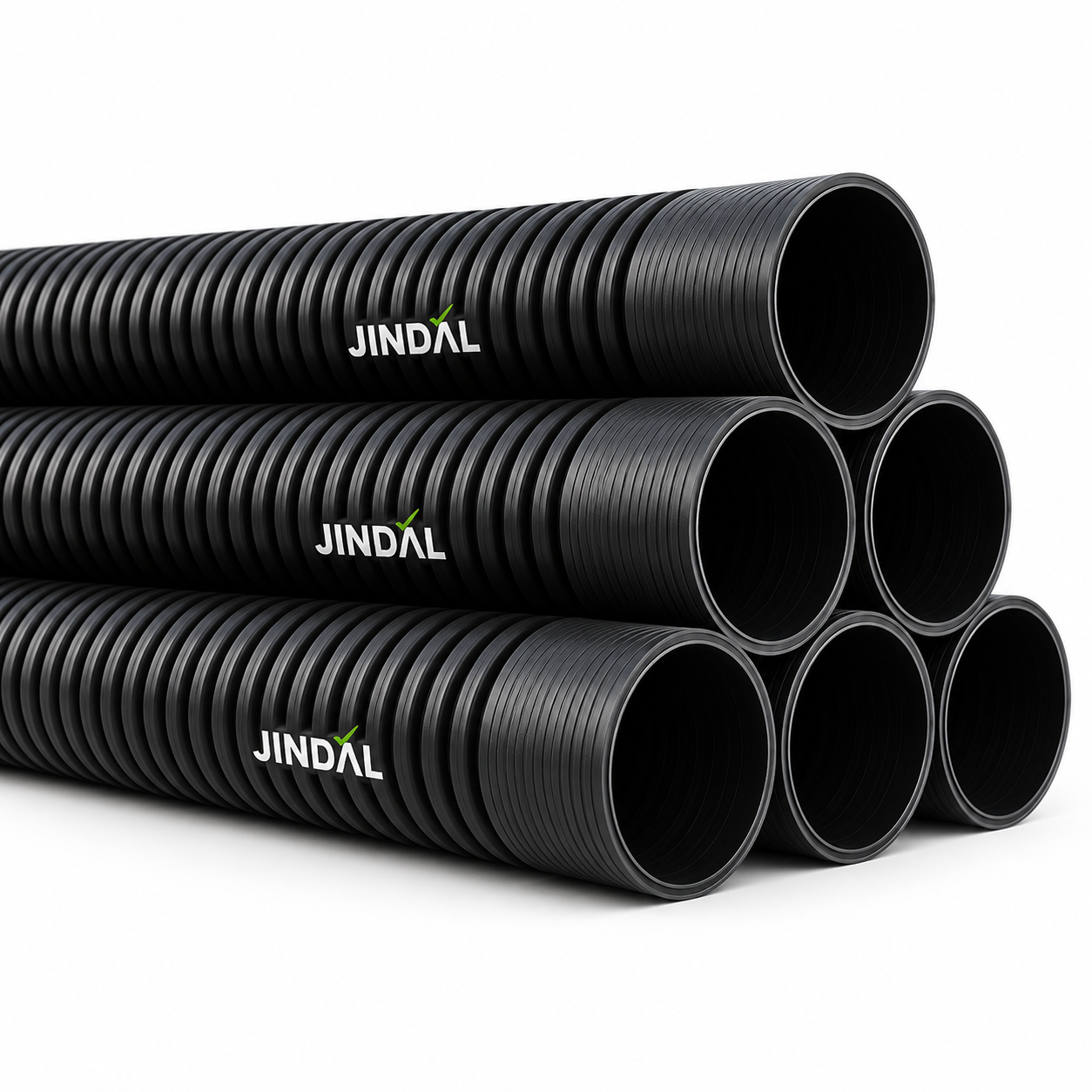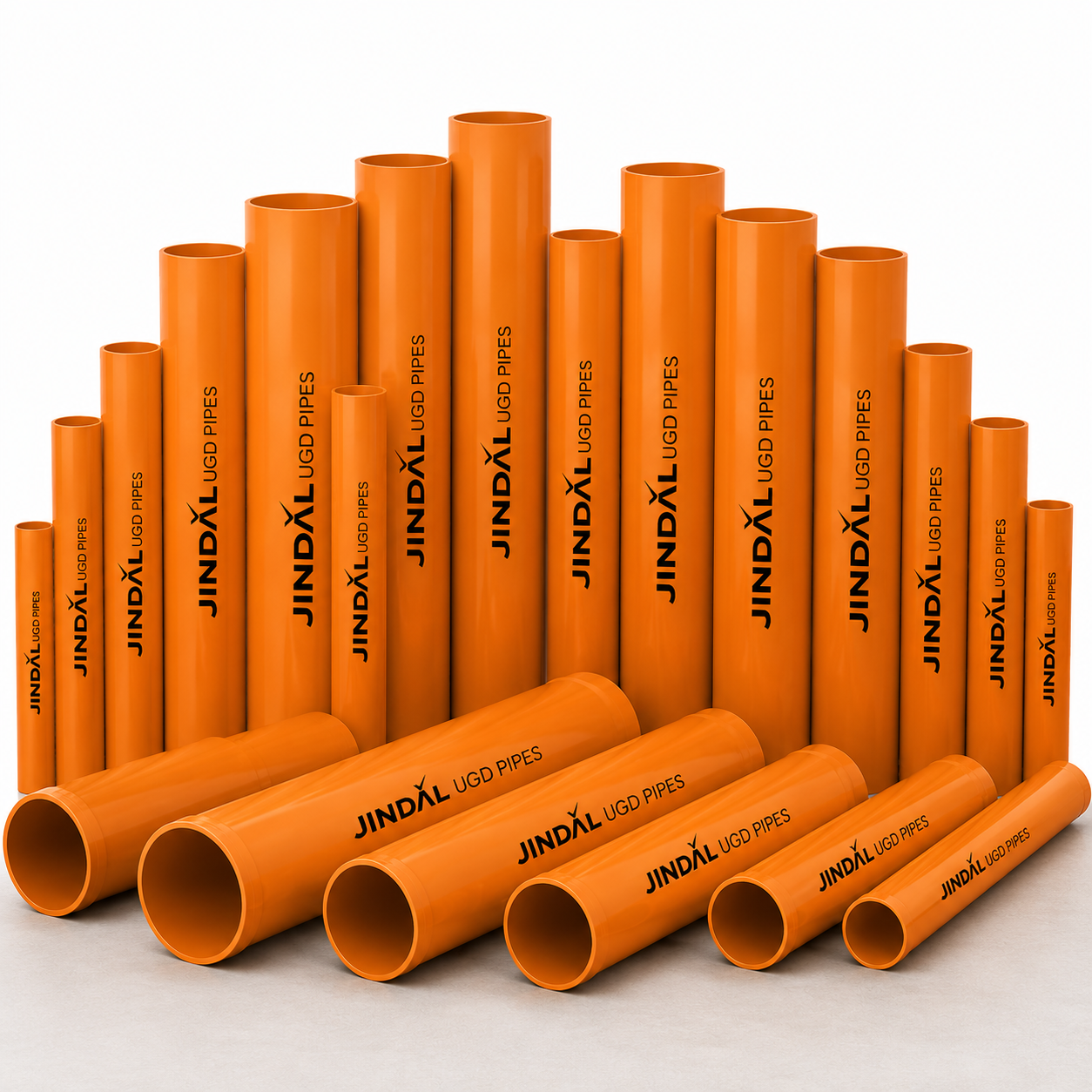
Underground drainage built to IS 15328 : 2003.
uPVC underground sewerage and drainage pipes — IS 15328 : 2003, 110–315 mm in SDR 51, 41 and 34.
Jindal uPVC Under Ground Drain (UGD) Pipes are large-diameter, non-pressure pipes engineered for buried sewerage, storm-water and industrial effluent networks. Manufactured by Jindal Composite Tubes Pvt. Ltd. — a DS Jindal Group company — they are produced on sophisticated extrusion lines from carefully selected raw material and pass through a strict series of QC checks before dispatch.
The pipes conform to IS 15328 : 2003 and carry the BIS ISI Mark (CM/L-6200053689). They are supplied in the 110 mm to 315 mm outer-diameter range in three stiffness classes — SDR 51 (SN 2), SDR 41 (SN 4) and SDR 34 (SN 8) — in standard 6 metre lengths, with a factory-formed socket at one end for an elastomeric ring joint or a solvent-weld joint.
Conforms to IS 15328 : 2003 (uPVC non-pressure pipes for use in underground drainage and sewerage systems). ISI marked under BIS Licence CM/L-6200053689. Outside diameters from 110 mm up to 315 mm in three stiffness classes — SN 2 / SDR 51 / Series S 25, SN 4 / SDR 41 / Series S 20 and SN 8 / SDR 34 / Series S 16.5 — supplied in 6 metre standard lengths.
ISI marked to IS 15328 : 2003 (Licence No. CM/L-6200053689) and manufactured under ISO 9001 quality management. Every batch is checked for outer diameter, wall thickness, ring stiffness, impact strength, vicat softening temperature and socket integrity before dispatch.
Designed for buried installations — engineered ring stiffness resists soil and traffic loads.
Push-fit elastomeric joints absorb minor ground movement without leakage.
Does not rust, scale or corrode — unaffected by sewage gases and effluent chemicals.
Significantly lower installed cost than RCC / SW pipes over the project life cycle.
Inspect the spigot and socket for damage. Cut pipes square with a fine-tooth saw and chamfer the spigot end at about 15°.
Clean the socket, the spigot and the elastomeric rubber ring — they must be free of grit, soil and moisture.
Seat the rubber ring correctly in the socket groove, with the thicker section facing into the socket.
Apply approved pipe lubricant evenly to the chamfered spigot end (never to the rubber ring or socket groove).
Align the pipes and push the spigot fully home into the socket up to the witness mark — this gives the expansion gap.
For solvent-weld sockets, apply rigid uPVC solvent cement evenly to both surfaces and push fully home with a slight twist; allow to cure before bedding and backfilling.
All dimensions in mm. SDR = Standard Dimension Ratio. SN = Nominal Ring Stiffness in kN/m². Standard length 6 metres.
| Nominal O.D. (mm) | SDR 51 / SN 2 / S 25 — Wall (mm) | SDR 41 / SN 4 / S 20 — Wall (mm) | SDR 34 / SN 8 / S 16.5 — Wall (mm) |
|---|---|---|---|
| 110 | — | — | 3.2 |
| 125 | — | 3.2 | 3.7 |
| 160 | 3.2 | 4.0 | 4.7 |
| 200 | 3.9 | 4.9 | 5.9 |
| 250 | 4.9 | 6.2 | 7.3 |
| 315 | 6.2 | 7.7 | 9.2 |
Jindal uPVC Under Ground Drain pipes are manufactured to IS 15328 : 2003 — the Indian Standard for uPVC non-pressure pipes used in buried sewerage and drainage systems. They are ISI marked under BIS Licence CM/L-6200053689.
Pipes are produced from 110 mm to 315 mm nominal outer diameter in three stiffness classes — SDR 51 (SN 2 / Series S 25), SDR 41 (SN 4 / Series S 20) and SDR 34 (SN 8 / Series S 16.5). All sizes are supplied in a standard length of 6 metres with a factory-formed socket at one end.
SDR (Standard Dimension Ratio) is the ratio of outer diameter to wall thickness — a lower SDR means a thicker wall. SN (Nominal Ring Stiffness, kN/m²) is the pipe's resistance to ring deflection under external load. Higher SN classes (SN 8) are chosen for deeper trenches or heavier traffic loads; SN 2 suits light, shallow installations.
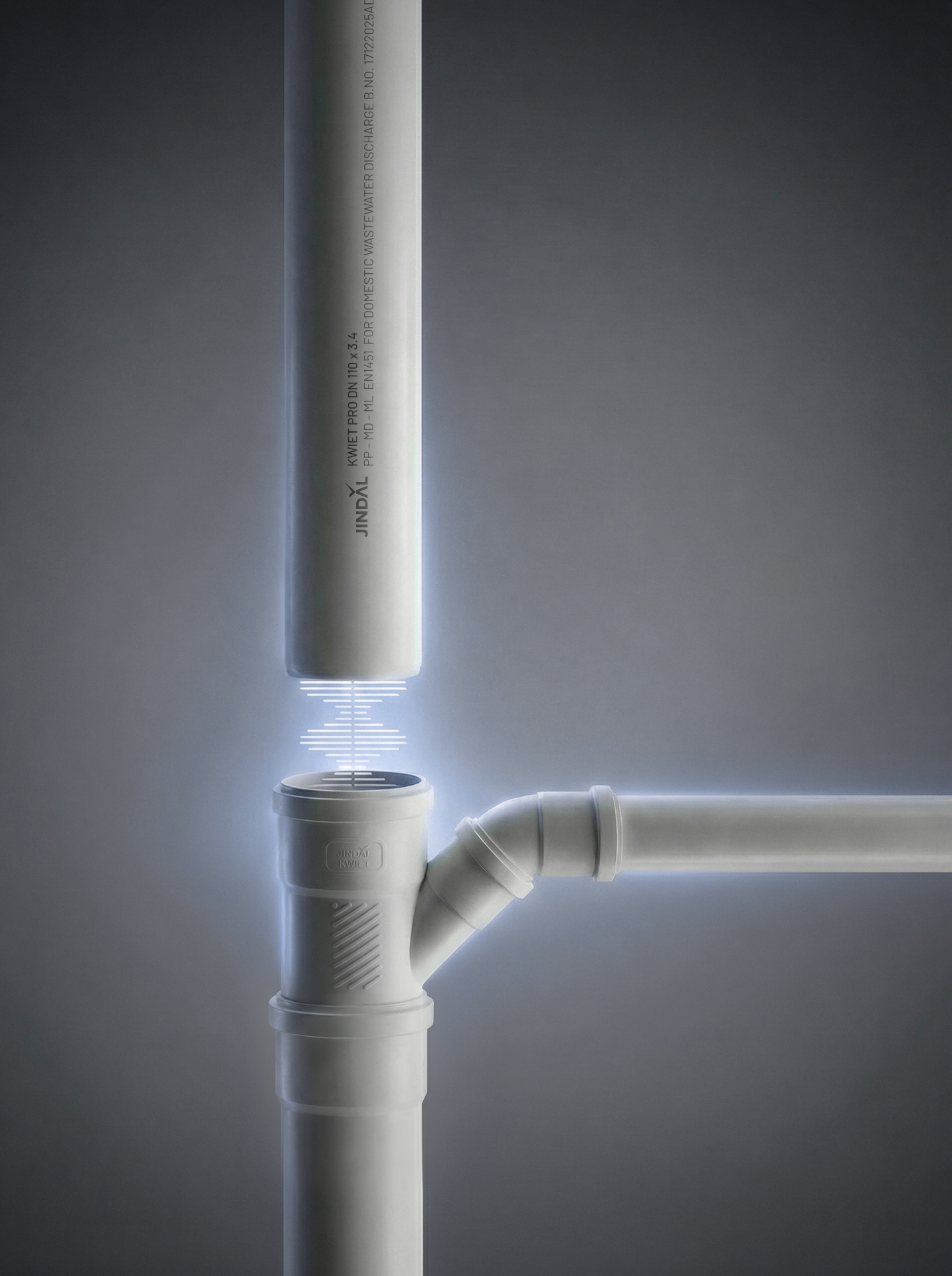
Jindal UGD pipes are supplied with a factory-formed socket designed either for an elastomeric rubber ring push-fit joint or for a uPVC solvent-weld joint. Rubber ring joints are the standard choice for long sewer runs as they absorb thermal movement and minor ground settlement while remaining 100% leak proof.
They are used for non-pressurised buried drainage applications — municipal sewer networks, township drainage, storm-water and surface-water drains, industrial effluent lines and inlet/outlet piping for STPs and ETPs. They are not intended for pressurised water supply.
uPVC UGD pipes are lighter, faster to install in long 6 m lengths, leak-proof at every push-fit joint, fully resistant to sewage gases and chemicals, and free from corrosion, scaling and root penetration — typically delivering a significantly lower installed and life-cycle cost than RCC or SW pipes.
All Jindal UGD pipes are supplied in a standard 6 metre length with one socket end and one plain (spigot) end. Shorter cut lengths can be prepared on site using a fine-tooth saw with a 15° chamfer on the cut spigot.
Yes. The pipes are widely used for inlet, outlet and inter-tank piping in Sewage Treatment Plants and Effluent Treatment Plants because uPVC is chemically inert against the typical effluent stream and the leak-proof socket joints prevent contamination of the surrounding soil and groundwater.
Next Step
Talk to our team about sizing, pricing and project quantities — or grab the catalog and price list.