
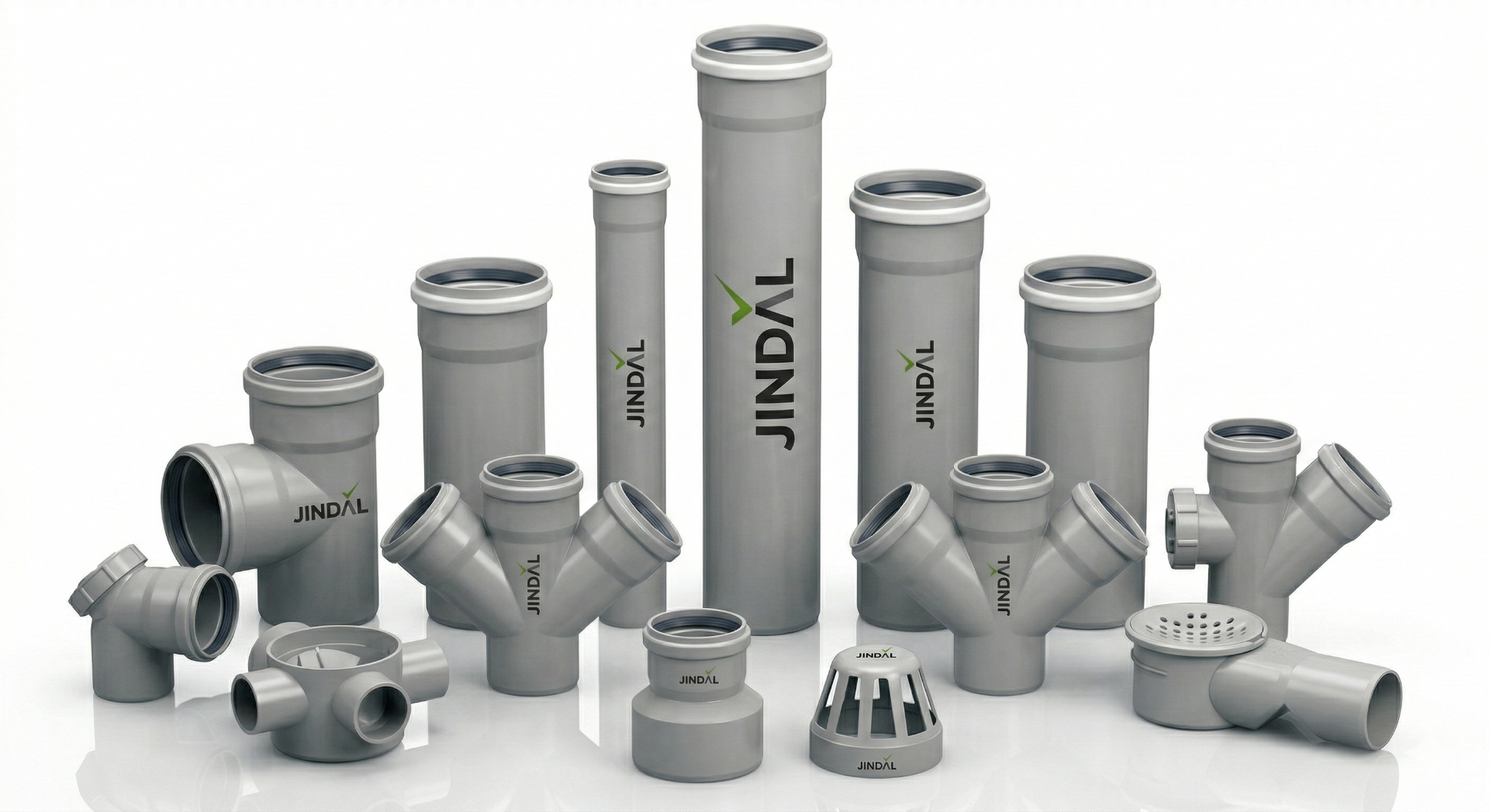
Type A or Type B SWR? Pick the wrong one and your soil stack rumbles every flush. Here's how to choose.
SWR pipes carry every drop of soil, waste and rainwater out of a building. IS 13592 splits them into two classes by ring stiffness — Type A and Type B. Specifying the right one is the difference between a silent, leak-proof stack and constant complaints from the residents below.
Type A — Light Duty
Lower ring stiffness. Use for ventilation pipes and rainwater downtakes where load is low and the pipe is mostly empty.
Type B — Heavy Duty
Higher ring stiffness. Use for soil stacks, waste lines, kitchen drains and shallow underground drainage where the pipe carries flow continuously.
Standard Sizes & Use
75 mm — kitchen sink and basin waste.
110 mm — WC soil stack and main waste line.
160 mm — rainwater and large multi-storey soil stacks.
Joining: Ring-Fit vs Solvent
Ring-fit (rubber-sealed) sockets allow thermal movement and are preferred for tall vertical stacks. Solvent-weld joints are fine for short branch lines.
Acoustic Performance
Three-layer SWR pipes and acoustic foam wrapping cut flush noise dramatically — critical for premium high-rises where bathrooms sit above bedrooms.
Frequently Asked Questions
Is SWR Type A or Type B better?
Neither is 'better' — they serve different roles. Type B is for soil, waste and underground drainage. Type A is for ventilation and rainwater downpipes.
What pipe size should I use for a WC?
110 mm SWR Type B is the Indian standard for the WC soil line and main stack.
How long do PVC SWR pipes last?
ISI-marked SWR pipes installed correctly have a typical service life of 50+ years.
Reviewed by
Sahil Jindal
Managing Director, Jindal Composite Tubes Pvt Ltd
3rd-generation pipe manufacturer with 25+ years of hands-on experience in PVC, CPVC and UPVC pipe engineering, ISI/BIS compliance and India-wide plumbing distribution.