
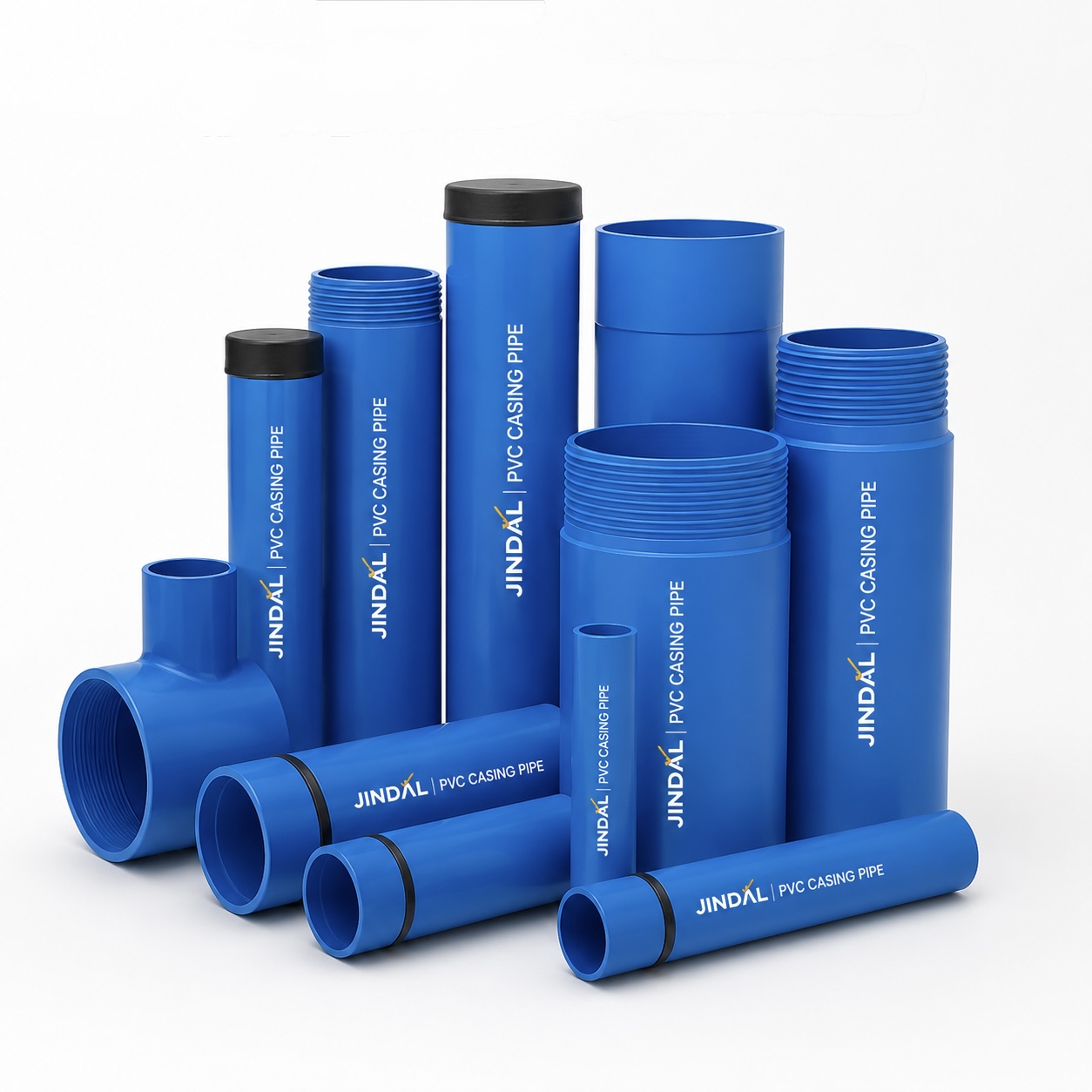
Borewell casing keeps the bore stable, the strainer clean and the pump safe. Here's how to specify it right.
PVC casing pipes line the borewell wall, prevent collapse, keep silt out and provide the structural shell that protects the column pipe and pump inside. Manufactured to IS 12818, they are the standard across Indian agriculture and domestic borewells.
Casing Grades
CS (Casing Shallow) — for shallow wells up to 80 m.
CM (Casing Medium) — for medium wells 80–250 m.
CD (Casing Deep) — for deep wells beyond 250 m.
Sizes Commonly Used
4 inch and 4½ inch for domestic borewells; 5 inch, 6 inch and 7 inch for agricultural and commercial wells; 8 inch and above for industrial installations.
Why PVC Casing Beats MS
Zero rust contamination — clean water for the life of the well.
Threaded square couplers create water-tight joints.
Light enough to handle without cranes for most sizes.
Frequently Asked Questions
What size casing pipe is used for domestic borewells?
4 inch and 4½ inch PVC casing pipes are the most common for domestic borewells in India.
Difference between casing and column pipes?
Casing pipes line the borewell hole; column pipes hang the submersible pump inside. Both are standardised under IS 12818.
How long do PVC casing pipes last?
ISI-marked PVC casing pipes have a typical service life of 25+ years in a properly drilled borewell.
Reviewed by
Sahil Jindal
Managing Director, Jindal Composite Tubes Pvt Ltd
3rd-generation pipe manufacturer with 25+ years of hands-on experience in PVC, CPVC and UPVC pipe engineering, ISI/BIS compliance and India-wide plumbing distribution.