
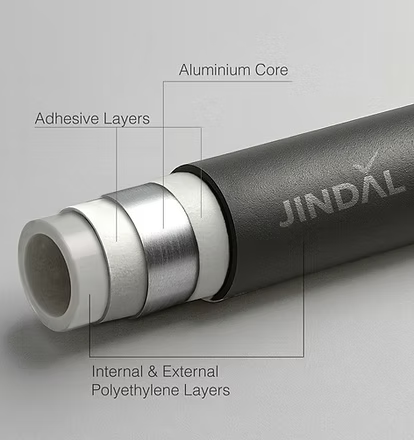
Three layers, one pipe: PEX-Al-PEX. Here's why MLC has become the European standard for premium plumbing and underfloor heating.
MLC (Multi-Layer Composite) pipes sandwich a thin aluminium tube between two layers of cross-linked polyethylene (PEX). The aluminium gives the pipe shape memory and an oxygen barrier; the PEX provides chemical resistance and corrosion-free flow.
Why MLC
Bends and holds shape — no fittings needed at every corner.
100% oxygen barrier — critical for closed-loop heating systems.
Lower thermal expansion than pure plastic pipes.
Service life 50+ years on hot and cold plumbing.
Applications
Premium residential hot and cold plumbing.
Underfloor and radiant heating systems.
Hotel and hospital re-piping where retrofit speed matters.
Solar water heating distribution.
Joining MLC
Press-fit and compression fittings are the standard. Both give leak-proof joints that can be made in seconds — no welding, no curing time.
Frequently Asked Questions
What does MLC pipe stand for?
MLC stands for Multi-Layer Composite — typically a PEX / Aluminium / PEX construction.
Are MLC pipes good for hot water?
Yes. MLC pipes are rated for continuous hot-water service and are widely used for underfloor heating and premium residential plumbing.
How are MLC pipes joined?
Most commonly with press-fit or compression fittings, both of which create leak-proof joints in seconds.
Reviewed by
Sahil Jindal
Managing Director, Jindal Composite Tubes Pvt Ltd
3rd-generation pipe manufacturer with 25+ years of hands-on experience in PVC, CPVC and UPVC pipe engineering, ISI/BIS compliance and India-wide plumbing distribution.