
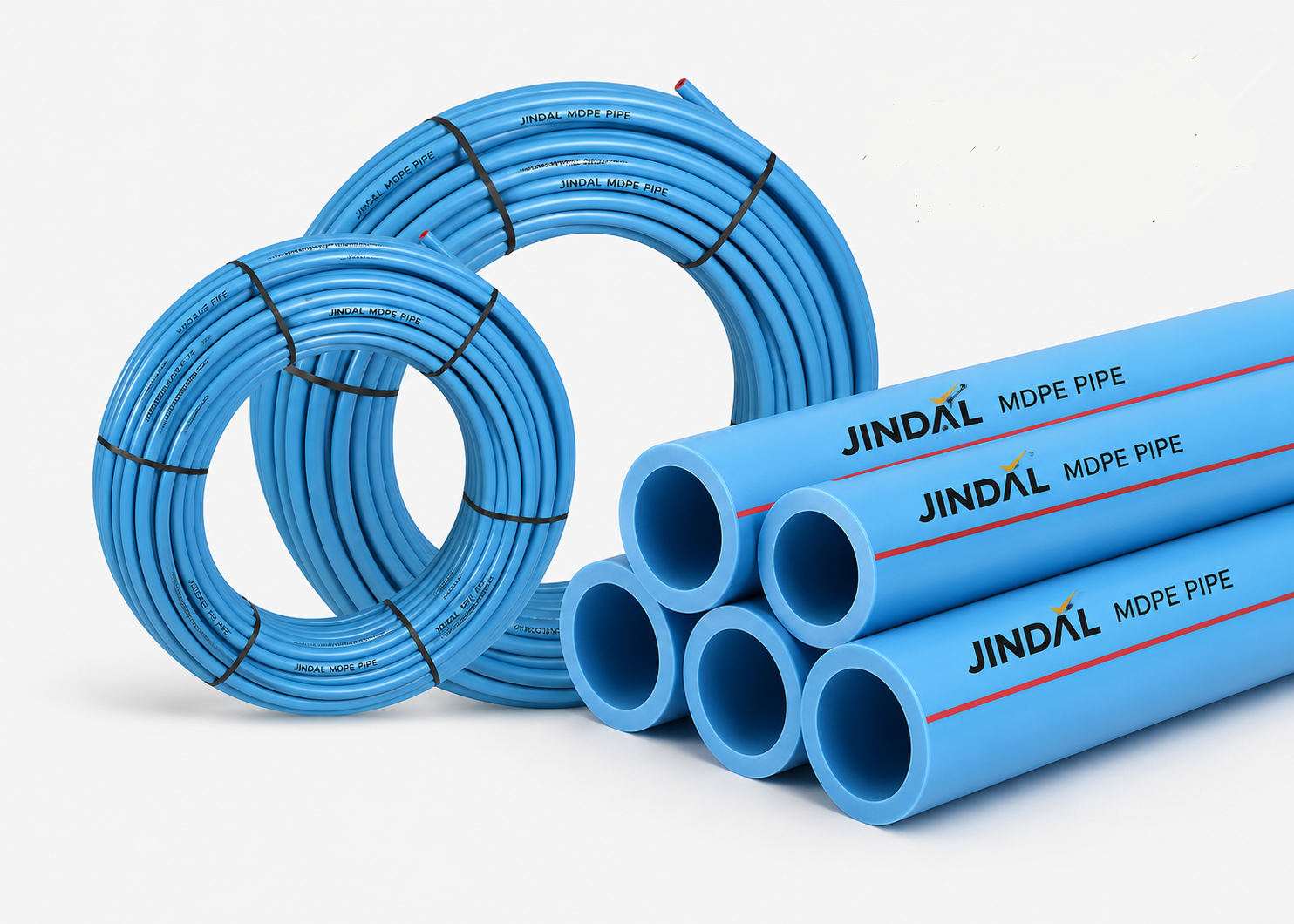
MDPE is the flexible cousin of HDPE — perfect for last-mile water and gas service lines.
MDPE (Medium-Density Polyethylene) sits between LDPE and HDPE on the density scale. It is more flexible than HDPE, easier to coil into long lengths, and the standard choice for low-pressure water and gas service connections that branch off larger mains.
Key Properties
Excellent flexibility — coils up to 100 m for trenchless installation.
Higher impact and crack resistance than HDPE in cold conditions.
Chemically inert; safe for potable water and natural gas.
Applications
Household water service connections from main to meter.
Underground gas service lines (PE 80 yellow).
Low-pressure irrigation distribution.
Mining and dewatering services.
Joining MDPE
Butt fusion, electrofusion couplers and compression fittings — same as HDPE. Most household service connections use compression fittings for speed.
Frequently Asked Questions
What is the difference between MDPE and HDPE pipes?
MDPE has lower density and more flexibility — easier to coil and install in long lengths, but lower pressure rating than HDPE at the same wall thickness.
Is MDPE safe for drinking water?
Yes. Food-grade MDPE is approved for potable water service lines worldwide and in India.
What colour is MDPE gas pipe?
MDPE gas pipes are yellow as per international convention; blue is used for water service lines.
Reviewed by
Sahil Jindal
Managing Director, Jindal Composite Tubes Pvt Ltd
3rd-generation pipe manufacturer with 25+ years of hands-on experience in PVC, CPVC and UPVC pipe engineering, ISI/BIS compliance and India-wide plumbing distribution.